Why Deciding What to Eat Feels Exhausting — And the Simple System That Fixes It
You've made it through another full day. Emails answered. Meetings survived. Family handled. And now someone asks the question that somehow breaks you every single time:
"What do you want for dinner?"
You're not weak. You're not undisciplined. Your brain is simply out of gas.
The short answer: The reason deciding what to eat feels impossible is decision fatigue — a scientifically documented phenomenon where your decision-making quality collapses after a long day of choices. The fix isn't more willpower. It's a simple meal decision system that removes the daily guesswork entirely.
What Is Decision Fatigue — and Why Does It Destroy Your Diet?
Every decision you make draws from the same mental energy reserve.
By the time 6pm rolls around, you've already made hundreds — sometimes thousands — of decisions. What to prioritize. Who to respond to. What your kids need. How to handle that meeting.
And research backs this up. A study of parole judges found they granted more favorable outcomes early in the day and became dramatically more restrictive as the day wore on — not because of the cases, but because their mental energy was depleted.
If it can happen to judges deciding people's futures, it can happen to you deciding what's for dinner.
When your brain hits empty, it defaults to three things:
What's familiar — the comfort food that's always worked before
What's convenient — whatever requires zero effort to obtain
What feels good right now — which is rarely aligned with your goals
This is why purpose-driven, high-achieving people — the ones who are disciplined in every other area of life — still find themselves in the Chick-fil-A drive-through at 7pm wondering what just happened.
It's not a character flaw. It's an unmanaged system.
How Does Decision Fatigue Sabotage Weight Loss Specifically?
The danger isn't just the occasional fast food run.
The real damage happens when decision fatigue becomes the default operating mode. When you never have a plan, you're always improvising. And when you're improvising while exhausted, your brain is going to choose comfort and speed every single time.
Here's what that looks like in real life:
Skipping the healthy meal you meant to prep because you're too tired to figure it out
Overeating in the evening because food becomes the one "easy" decision that also provides relief
Starting a new plan on Monday with full intensity, then collapsing by Wednesday when life picks back up
Using food emotionally — not out of hunger, but out of exhaustion and overwhelm
Sound familiar? That's the "start over" cycle. And decision fatigue is the engine driving it.

What Does Stewardship Have to Do With What You Eat?
Here's where most nutrition content misses the mark entirely.
The goal isn't to look a certain way. It's not about vanity, and it's not about fitting a cultural standard of fitness. For purpose-driven believers, the real reason to care about what you eat is stewardship.
Your body is the vessel you've been given to execute your calling. Every time decision fatigue wins and poor nutrition wins with it, you're operating at a fraction of your capacity. Less energy. More brain fog. Higher inflammation. Slower recovery.
You can't serve your family, your community, or your God-given purpose at full strength if your body is running on fumes and processed food.
Caring for your nutrition isn't a wellness trend. It's faithfulness to your calling.
That reframe changes everything. Suddenly, building a simple meal system isn't just a diet strategy. It's an act of intentional stewardship.
Why Meal Plans Don't Work for Busy Professionals
Let's be honest about meal plans: they work for about four days.
Then life happens — a late meeting, a sick kid, a last-minute work trip — and the plan shatters. You feel like you failed. You start over. Again.
The problem isn't your discipline. The problem is that rigid plans assume your life is predictable. It isn't.
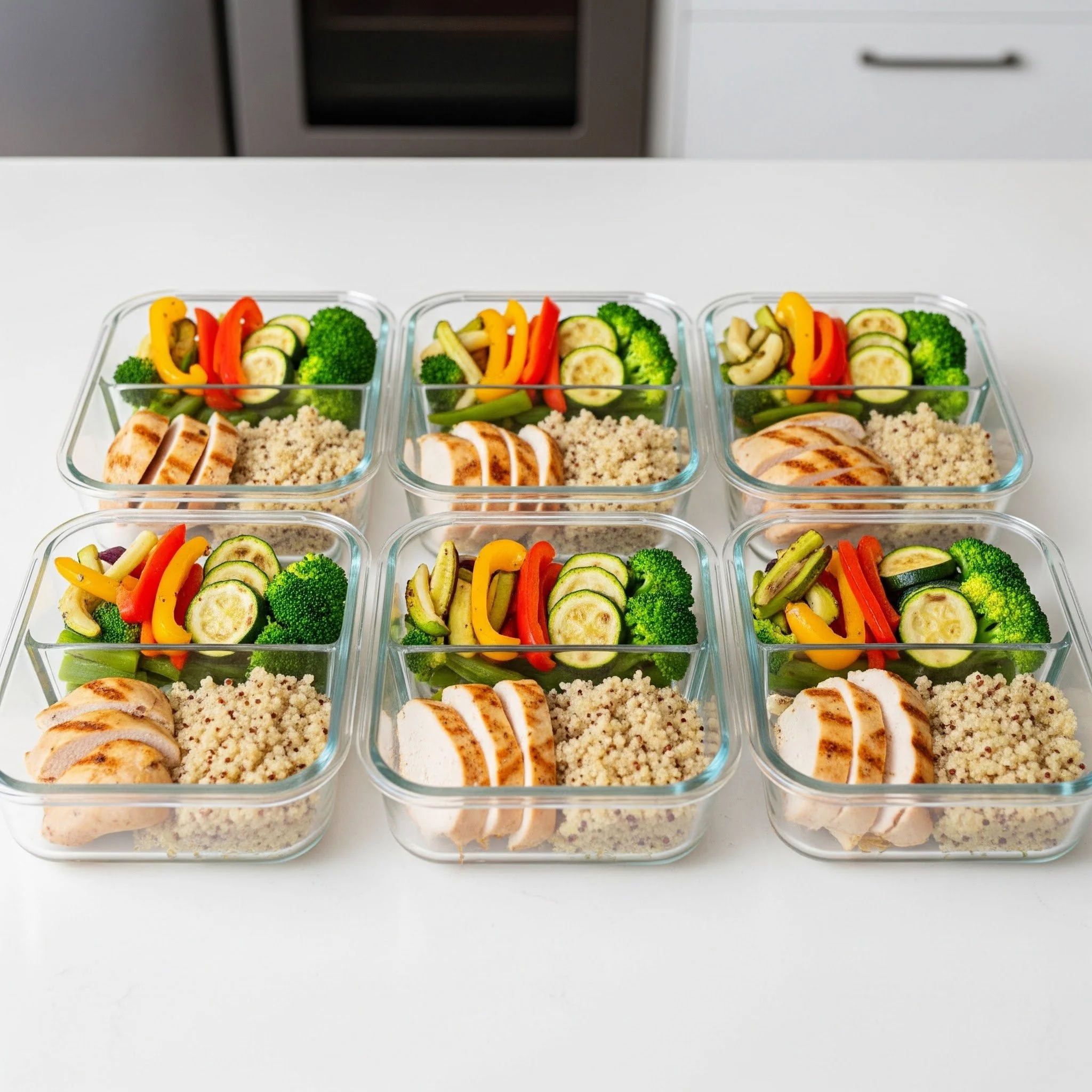
What actually works is a system, not a plan. A system is flexible enough to survive the chaos of a real week, while still keeping you anchored to your goals.
What Is a Meal Decision System — and How Do You Build One?
A meal decision system removes daily food decisions before the day even starts. Here's a practical three-part framework:
1. Use Meal Templates Instead of Meal Plans
A template isn't "eat grilled chicken and broccoli every Tuesday." It's a structure.
Think of it like this: instead of specifying the exact meal, you specify the category for each meal slot.
Example Dinner Template:
| Meal Component | Option A | Option B | Option C |
|---|---|---|---|
| Protein | Grilled chicken | Ground turkey | Salmon |
| Vegetable | Roasted broccoli | Sautéed spinach | Mixed salad |
| Carb / Starch | Brown rice | Sweet potato | Quinoa |
| Fat Source | Olive oil drizzle | Avocado | Handful of nuts |
2. Build 2–3 "Default Meals" You Trust
These are your go-to meals when decision-making energy hits zero.
Think of them like your favorite pair of jeans — comfortable, reliable, no thinking required. You keep the ingredients stocked, or you prep them ahead. When the day goes sideways, you don't have to think. You just execute.
Your default meals don't need to be gourmet. They need to be:
Aligned with your nutrition goals
Genuinely enjoyable (so you'll actually eat them)
Simple to prepare in under 20 minutes
Made from ingredients you always have on hand
A rotisserie chicken, a bag of frozen vegetables, and some pre-cooked rice can be dinner in seven minutes. That's a default meal. Simple. Reliable. Anchored.
3. Pre-Decide Your "Break Glass" Takeout Order
You are going to order takeout. Accept this now and plan for it.
Before a hectic week hits, identify 3–4 specific orders from restaurants you already like. Not "Chipotle probably has something good" — the specific order you'll place.
When life goes fully off the rails and cooking isn't happening, you're not starting from scratch with a foggy brain at 7pm. You already decided. You just execute.
This keeps you anchored to your goals even when the week breaks down around you.
How Do You Start a Meal Decision System Without Feeling Overwhelmed?
Start with one layer, not all three at once.
This week, do one thing:
Write down two default meals you already enjoy and keep those ingredients stocked.
That's it. One change. One anchor point in your week.
Build from there. Add a lunch template next week. Pre-decide your go-to takeout order the week after. Stack the system one simple piece at a time.
This is the Anchored Method — not a 90-day overhaul, not an elimination diet, not a complete lifestyle reset. Simple structures, built for your real life, that create consistent wins without burning you out.
The Bottom Line: Less Deciding, More Living
You were not created to spend mental energy every night wondering what to eat.
You were created for something far greater than that — a calling, a purpose, a mission that requires you to show up fully. The decision fatigue you feel around food is a slow drain on the energy you need for what actually matters.
The answer was never more willpower. It was always a better system.
Build the system. Reduce the decisions. Steward your body well.
Then go show up for everything you were built to do.
Ready to Stop Starting Over?
If you're tired of the cycle — the Monday resets, the Wednesday collapses, the Friday guilt — this is the work I do every day with my coaching clients.
Inside the Anchored Program, I build a simple, personalized nutrition strategy around your real life. No elimination diets. No obsessive tracking. No complicated rules that fall apart the moment your schedule does.
Just a clear system, 1:1 accountability, and a coach who has walked this road himself and won't ask you to do what he won't do.
This program is for purpose-driven professionals who are ready to lose 20+ lbs, get their energy back, and steward their bodies well enough to show up fully for their calling.
Spots are intentionally limited.